
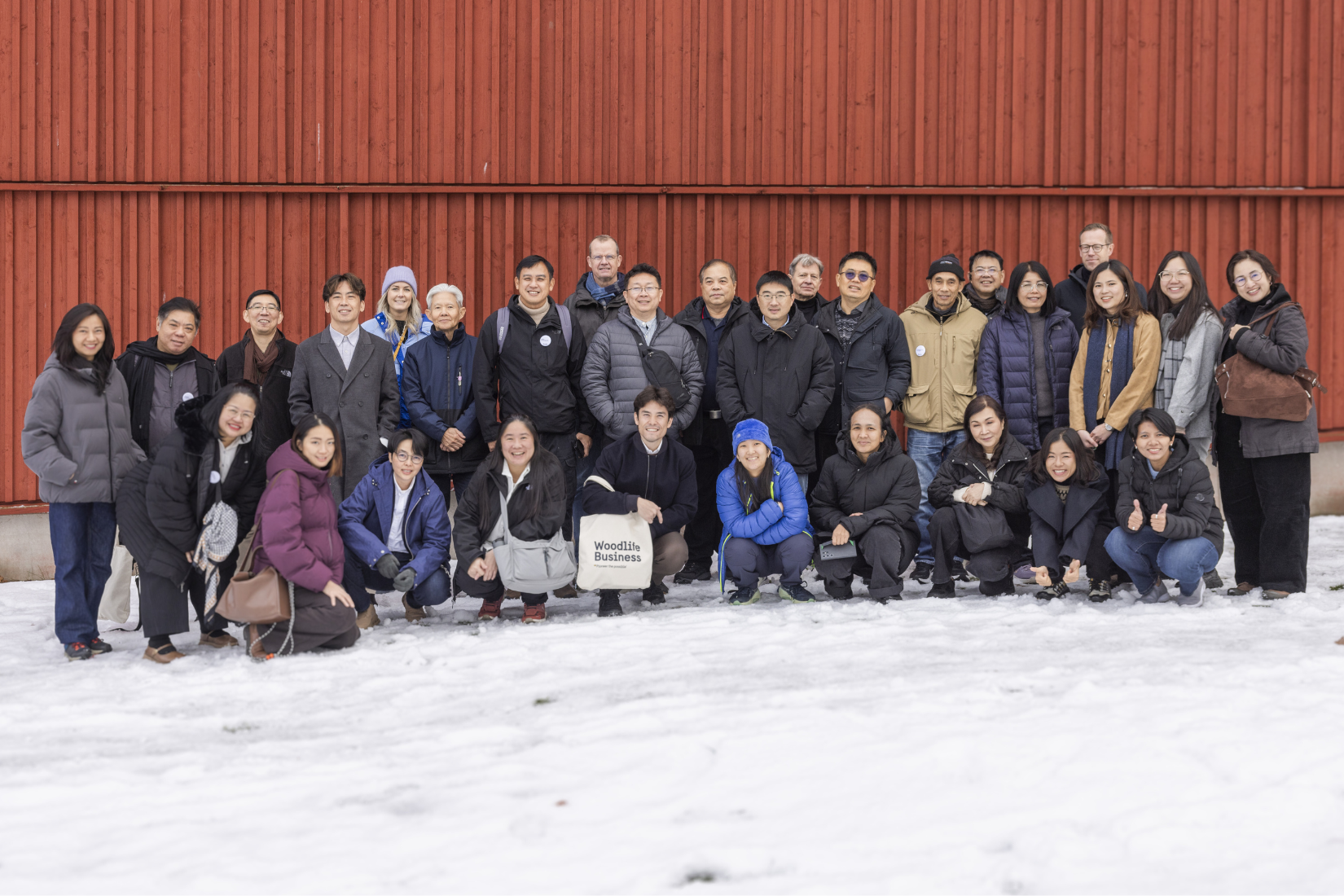
Building on the success of Woodlife Business in East Africa and Türkiye, the Swedish Institute has extended the initiative to Thailand in partnership with the Swedish Embassy in Bangkok, the Royal Thai Government, and a network of public, private, and academic partners in both countries. The Woodlife Business Thailand delegation brought together stakeholders from the forestry, construction, and design sectors. The programme, carried out with the support of the Swedish Forest Agency, explored how wood, as a renewable resource, can lead the way in sustainability and serve as a catalyst for innovation. It also examined opportunities to support Thailand’s transition towards a low-carbon, circular economy.
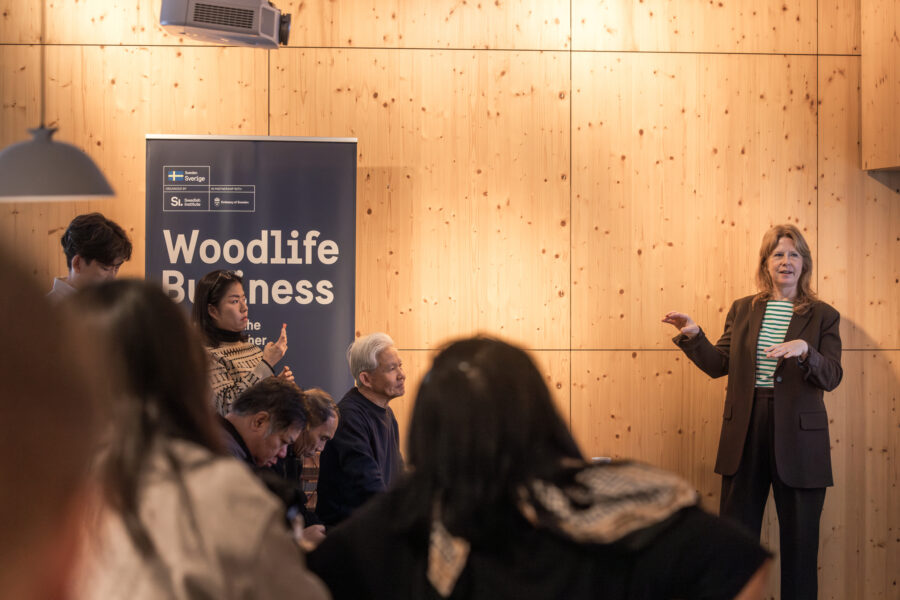
Connecting through Woodlife Business
The visit was part of Woodlife Business, an initiative that connects international stakeholders with Sweden’s private sector in mass timber construction and commercial forestry. Drawing on Swedish expertise, the initiative seeks to accelerate sustainable development, advance the global green transition, and showcase how wood can foster innovation and support climate-smart solutions.
Kurt Bratteby, Head of International Relations at the Swedish Institute, explains:
“Sweden aims to build long-term international connections across the forestry sector. By sharing Swedish expertise and sustainable solutions, we strengthen Sweden’s reputation as a trusted and innovative partner. Together, these efforts support global sustainability and Sweden’s competitive edge.”
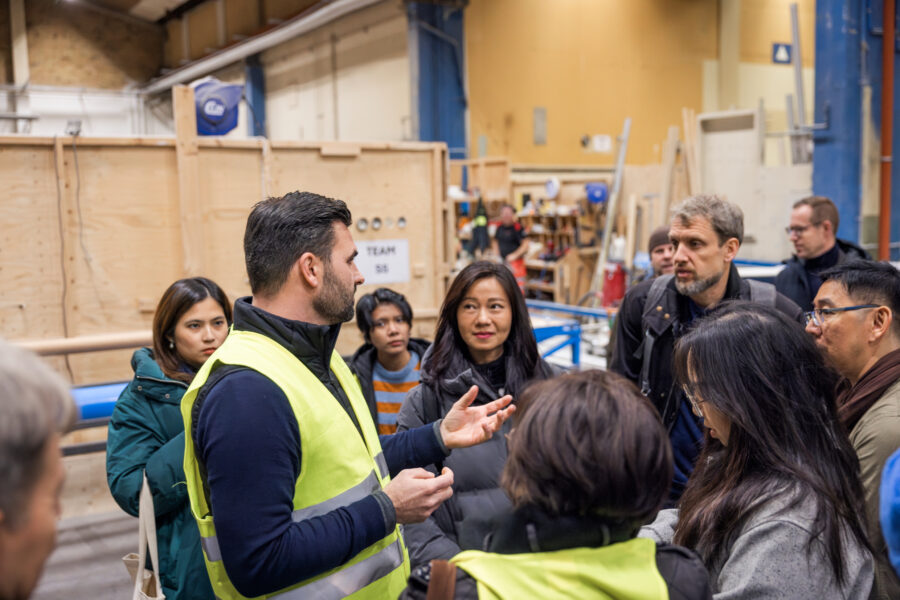
Exploring Sweden’s innovation hubs
The delegation visited two key hubs in Sweden’s wood innovation ecosystem: Stockholm and Växjö.
In Stockholm, participants learned about modern wood architecture and approaches to sustainable urban development. The programme included visits to Wisdome Sweden at the National Museum of Science and Technology and Stockholm Wood City in Sickla. Developed by Atrium Ljungberg, Stockholm Wood City is set to become the world’s largest urban district built in wood and has attracted international recognition for its innovative approach to sustainable construction.
The second part of the programme, organised in collaboration with Växjö Linnaeus Science Park, took place in Växjö, referred to as Sweden’s wood-building capital. The City has identified the potential of wood as a key driver of climate-neutral development and has worked to create an ecosystem that connects forestry, construction, research, and policy.
During the visit, the delegation met regional stakeholders, including the Municipality of Växjö, Linnaeus University, Vida Building AB, ATA Timber, Växjö Energi AB, and Arkitektbolaget, one of Sweden’s foremost wood construction designers. These meetings offered insight into how research, industry, and policy collaborate to advance wood-based solutions and climate-neutral development in practice.
Looking ahead
The visit by the Woodlife Business Thailand delegation reflects the programme’s broader ambition to connect stakeholders across forestry, construction, research, and policy. Building on Sweden’s experience with mass timber construction and design, the initiative highlights how renewable materials can contribute to climate-smart solutions and support the transition towards a low-carbon, circular economy.
As interest in climate-smart solutions grows, collaboration will play an increasingly important role. Looking ahead, Woodlife Business will continue to create opportunities for dialogue, knowledge exchange, capacity building, and innovation that support sustainable development and green growth.