
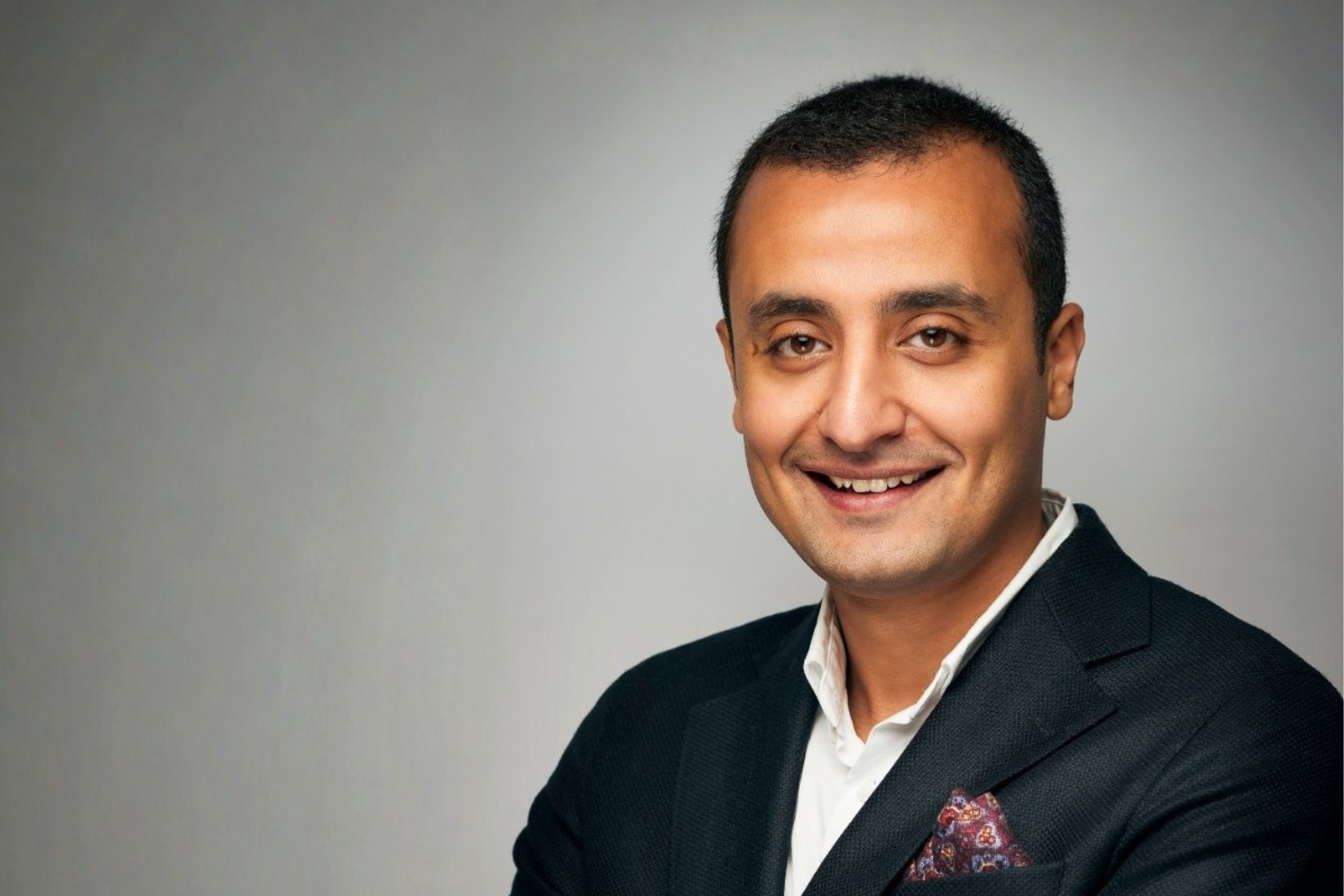
A scholarship, a chance meeting, and a career built on curiosity
“Back then, I didn’t think of it as entrepreneurship.”
Magdy discovered programming long before he imagined a future in Sweden or a career as a serial entrepreneur. Growing up in Alexandria, he began coding at ten, started his first company building websites at thirteen, and earned his first significant income through freelance work at fifteen.
Fast forward to today, the SI Scholarship alumnus works as an angel investor, adviser to venture capital (VC) funds, and mentor to start-ups across Europe and the Middle East. He is also the co-founder and CEO of FunRock, a Swedish mobile gaming studio. Among his achievements, he co‑founded Fragbite Group, a Swedish gaming company, served as Vice President, and led it through its IPO, becoming the first African and Arab to take a gaming company public.
“My mother was very proud,” he says with a smile.
Choosing Sweden
Magdy first came to Sweden through an exchange programme between Pharos University in Alexandria, where he studied computer engineering, and KTH Royal Institute of Technology. At the time, he had no plans to return for a master’s degree.
“Life was good in Alexandria. I had my company, a great community, and my family. Then the Arab Spring happened. Things changed fast, and suddenly, Sweden became the right place to continue my journey. That was the biggest factor in my decision to move,” Magdy explains.
Encouraged by his professors, he applied to KTH and for the Swedish Institute Scholarship. His grades were not his strongest – most of his time had gone into building a company – but he was reassured that the selection process looked at several factors, including work experience. In 2014, he was admitted to the master’s programme in Entrepreneurship and Innovation Management at KTH.
“I didn’t come to Sweden to study something I already knew. I wasn’t interested in doing engineering again – I wanted to learn more about business.”
Looking back, he describes his years in Sweden as formative.
“Those years were some of the best of my life. I learned so much, including things that would have saved my startup in Egypt from a lot of unnecessary struggles.”
Ahead of the curve
During his studies, Magdy’s master’s thesis drew attention for its unconventional approach. “I believed I could mathematically demonstrate the advantage of using popular pages and individuals on Facebook for marketing campaigns, rather than investing in Facebook ads,” he explains. He was exploring what we now call influencer marketing long before it became mainstream, and a chance conversation with one of Truecaller’s co-founders led him to write his master’s thesis at the company. After graduating, he stayed on and joined Truecaller as Marketing Manager for the Middle East and North Africa (MENA).
Connecting Sweden and MENA
Living in Sweden connected Magdy to a broad network of Swedish entrepreneurs, while his background gave him insight into MENA. As Nordic companies grew more interested in the region, he saw an opportunity to bridge the two. In 2022, he co-founded Söderhub, a consultancy that helps Nordic companies enter and scale in the region.
Since then, he works to strengthen connections between Sweden and MENA, especially within the field of tech, gaming, innovation and education.
“Companies invite me into these conversations because I understand both sides – the opportunities in MENA and how Nordic companies think. Being from the region and having taken a Swedish gaming company to an IPO gives me a perspective few others have.”
Life and learning in Sweden
When asked how Sweden has influenced him, Magdy talks about trust.
“Sweden has influenced me in many ways, especially when it comes to trust. There is a strong culture of trust – in the system and in each other. Here, a handshake means something. You can rely on it. That level of reliability changes how you think, how you work, and how you lead.”
The SI Scholarship and his time at KTH remain an important part of his journey. He remembers the sense of community among students and fellow scholarship recipients, and how the university, together with SI’s Network for Global Professionals (NFGP), gave him opportunities to take part in activities and meet people from around the world. This support helped him settle in Sweden.
“It changed my perspective and shaped me as a person. Suddenly, I was in a diverse setting, which was very different from Egypt, where things are more homogeneous.”
He also reflects on the academic environment at KTH, where he was surrounded by smart, driven students who challenged him intellectually. His decision to study entrepreneurship and innovation management helped shape his future path. He highlights Sweden’s triple helix model – where universities, industry and government work closely together – as a clear international advantage.
“Sweden has exceptional education,” he says.
What would he say to future applicants?
Magdy’s advice reflects on his own journey. He emphasises ambition, curiosity and openness to opportunity.
“Dream about what you want to achieve. Not just what you want to study, but where you hope to go. The scholarship can help you get there.”
He smiles and adds:
“My application to the SI Scholarship was about dreams, and I’m fulfilling them now.”
* The interview took place during a visit to the Swedish Institute in January 2025, where Magdy met with Director-General Madeleine Sjöstedt, Kurt Bratteby, Head of the Department for International Relations, and colleagues from across different teams and roles within the organisation.